
Solving code challenges with performance-based design
Prescriptive codes don’t fit every building. For complex, constrained, or unconventional projects, Sparc uses performance-based design to evaluate fire, smoke, and occupant behavior and deliver defensible solutions that reduce approval risk and keep projects moving forward with confidence.
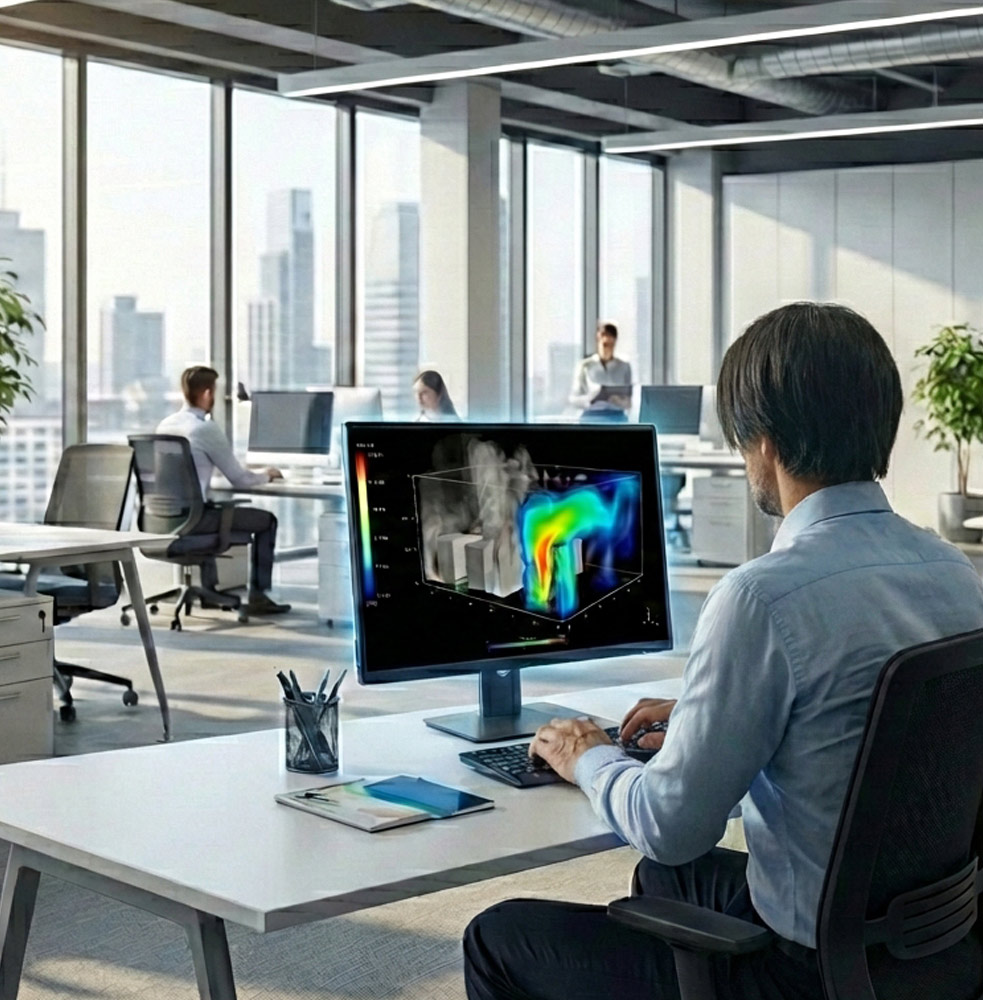
Smart engineering that saves money
Why over-design when precision delivers the same level of safety at a lower cost? Performance-based design replaces conservative assumptions with engineering analysis.
Sparc uses computational fluid dynamics to:
- Recreate actual building geometry
- Accurately model smoke behavior under real-world conditions
- Eliminate over-designed systems driven by conservative assumptions
- Deliver properly sized, code-compliant systems that perform as intended
- Reduce construction and long-term project costs
- Provide confidence based on engineering precision, not guesswork
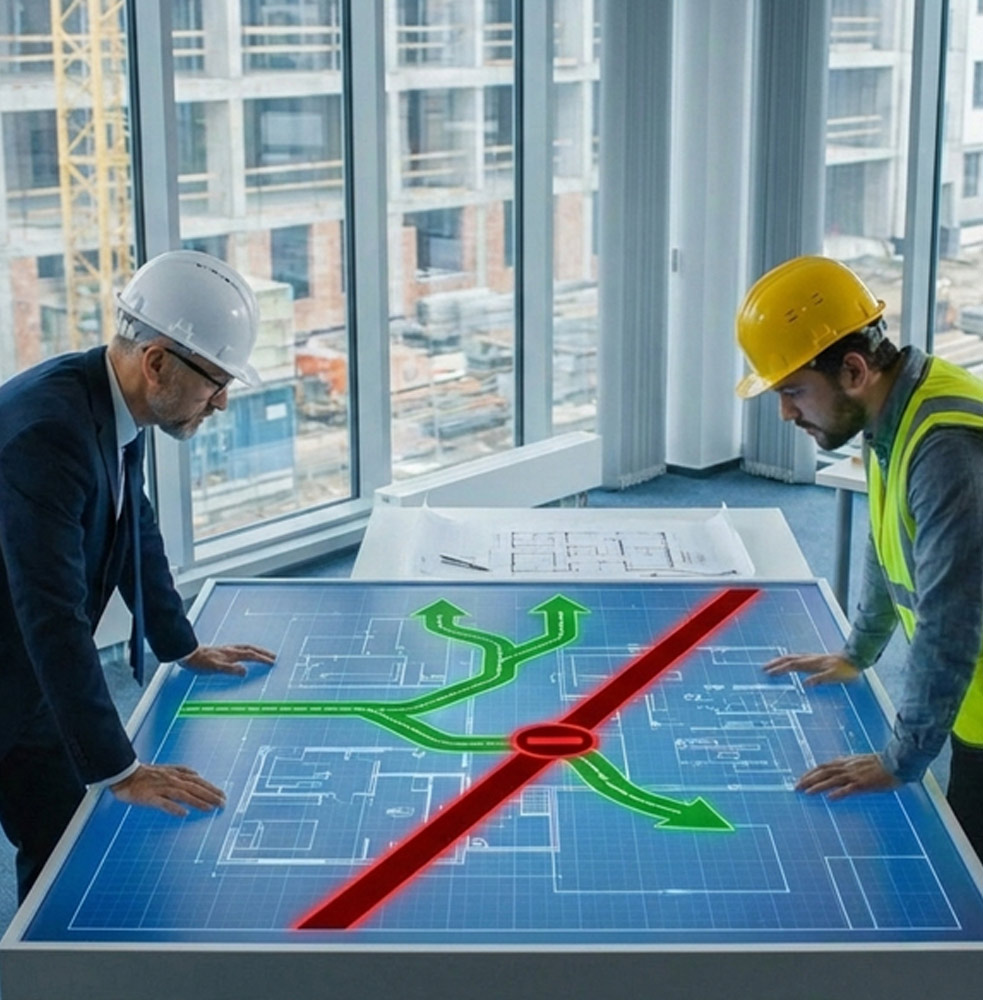
When prescriptive code limits otherwise safe design
Prescriptive fire and building codes cannot anticipate every condition. In fact, strict compliance can add complexity without improving safety.
Sparc develops defensible alternative code approaches that demonstrate equivalent or greater life safety through engineering analysis and clear justification for AHJ review. That way, you’re able to find a compliant path forward that:
- Maintains life safety
- Supports approval
- Allows projects to proceed without unnecessary redesign, cost, or operational compromise
Services
Solve unique fire protection and ventilation challenges
Find alternative paths to fire safety and compliance when prescriptive codes don’t fit:
- Computational Fluid Dynamics (Fire Modeling) with Fire Dynamics Simulator (FDS)
- Egress Modeling with Pathfinder
- Alternative Code Approaches / Developing Equivalent Levels of Safety
- CONTAM Analysis for Stair and Elevator Pressurization
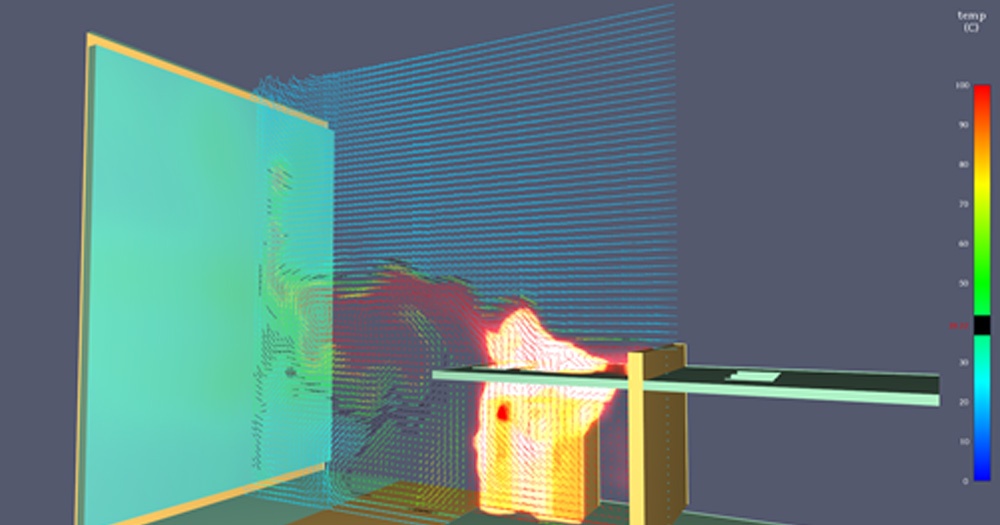
Battery energy storage system exposure analysis
Sparc utilized performance-based design and CFD modeling to evaluate fire risks associated with the deflagration vents. The analysis demonstrated that the adjacent buildings met the performance criteria, resulting in the approval of the BESS location.


Frequently asked questions
Get answers to commonly asked questions related to building and fire code consulting:
Performance-based design uses engineering analysis and professional judgment to demonstrate that a building meets the intent of the code or achieves an equivalent level of life safety when prescriptive requirements are impractical or do not align with project conditions. This approach may be applied to system performance evaluations such as smoke control, egress timing, and pressurization systems, as well as to alternative code approaches addressing items like excess travel distance, unique layouts, existing building constraints, or other prescriptive code limitations. Fire and egress modeling, engineering judgment, and equivalency documentation are used as appropriate to support these solutions.
Sparc uses advanced modeling tools to support performance-based design, including CONTAM, Fire Dynamics Simulator (FDS), and Pathfinder. CONTAM, developed by the National Institute of Standards and Technology (NIST), is used to analyze airflow and pressure relationships for smoke control, stairwell, and elevator pressurization systems. FDS is used to model fire and smoke development, heat release, and tenability conditions, while Pathfinder is used to evaluate occupant movement and egress performance. Together, these tools allow Sparc’s Professional Engineers to develop accurate, defensible designs that address system interaction, life safety, and approval risk beyond what prescriptive methods alone can provide.
It can justify equivalent levels of safety when traditional code requirements are difficult to meet, such as:
- Insufficient egress capacity
- Exceeded travel distances
- Fire exposure due to building separation
- Alternative smoke detection spacing
- Altering the required make-up air or exhaust quantities for smoke control systems
Traditional methods often rely on hand calculations and spreadsheets, which use simplified assumptions and may overestimate system requirements. Performance-based design uses advanced modeling to account for building geometry, airflow, and smoke behavior, resulting in more accurate, safer, reliable, and cost-efficient systems.