
On Balancing Code Compliance with Practicality, and Where the Fire Protection Industry Is Headed
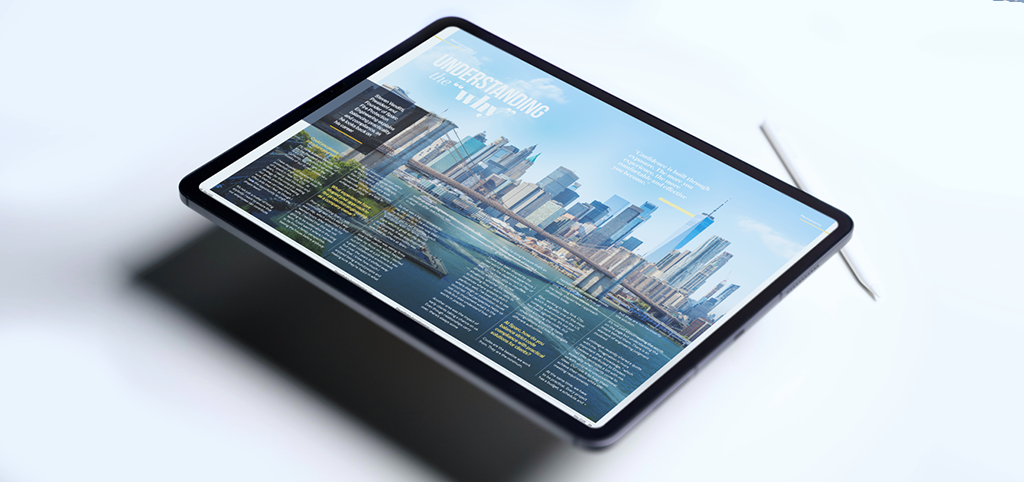
Sparc President & Founder Steven Venditti, P.E., was recently featured in Fire & Safety Journal Americas, where he looks back on 10 years of Sparc, the challenges currently faced by fire protection engineers, and what the next 10 years look like.
Drawing on more than two decades of fire protection engineering experience, including active fire service since 1999, Steven discusses how Sparc navigates the tension between strict code requirements and practical, constructible solutions.
“Codes are the baseline we work from. They are the minimum, but they are not necessarily the solution.”
Could you please introduce yourself?
My name is Steven Venditti, and I am the President and Founder of Sparc Fire Protection Engineering. Currently, we are right in the middle of our 10-year anniversary.
I have decades of experience in fire protection engineering, with most of it spent in New York City. At Sparc, I mainly lead the vision and strategy for the company; setting our goals, priorities and making sure that we can meet them. I often joke that I feel as though I have the opportunity to draft the dream team!
It’s not just a matter of hiring anybody. I want to ensure that our employees can contribute to our mission and vision while working well alongside others at the company. It’s no different than a quarterback and a wide receiver knowing their teammates’ tendencies, so they are able to achieve great plays.
What experiences have shaped your approach to fire protection engineering as a company owner?
Prior to launching Sparc, I was commuting two hours each way every day, which amounted to four wasted hours. After talking to my wife, I realized that this was not going to be sustainable in the long term. It just wasn’t where I wanted to be from a family perspective, leaving the house before anybody woke up and getting home after dinner or after everybody was in bed.
So that was a big component for me, the ability to be around for my family. I’m fortunate now that I basically get to eat breakfast, lunch and dinner with my family most days, which is great for the family environment. It was also important to me that this opportunity was extended to others at Sparc.
Another factor was seeing firms lose their culture, which helped shape my focus on people. I started out of college at a job where it was a great collaborative environment, but over the years it shifted away from that. I knew how much I enjoyed being around people and making sure they’re happy in what they’re doing because that’s an important part of having a great team.
I have also been shaped by my real-world fire service experience. I joined the fire department in May of 1999, so I’ve been able to interface directly with systems in real situations, whether it’s responding to building fires or alarm calls. In instances where systems didn’t perform well, I’ve been able to see where design or installation issues occurred. That perspective helps us not only implement what’s in the code but also understand how it works in practice.
Another area was the impact of early clients taking a chance on us. Even though relationships carry over, there’s always some hesitation when someone moves from a larger firm to a firm of one. Having those clients trust me really shaped how I approach situations today.
Also, working in New York City, which is arguably one of the most complex environments in the US, has been significant. It’s not just about knowing the codes, but understanding building types, configurations and how to navigate different authorities.
At Sparc, how do you balance strict code compliance with practical solutions for clients?
Codes are the baseline we work from. They are the minimum, but they are not necessarily the solution.
It’s not just about reading the words on the page but understanding the intent behind them. There is an element of engineering judgment involved.
A colleague recently shared a quote with me, “imagination is more important than knowledge,” which I believe is attributed to Einstein. That idea resonates a lot with me, especially when clients come to us with unique or unconventional ideas. Our role is to help them achieve their vision while still meeting requirements.
At the same time, we have to be practical. Every project has a budget, a schedule and constructability requirements. So, it’s about aligning code interpretation with project goals and delivering something that actually works.
Anyone can read the code, but interpreting it, aligning it with project objectives and delivering a functional solution is what really matters.
What are the most pressing challenges currently facing fire protection engineers?
One major challenge is increasing complexity. New technologies are often outpacing the codes, which requires a shift toward performance-based thinking.
A good example is energy storage systems, particularly lithium-ion batteries. Early on, there wasn’t as much structure or familiarity. While codes and standards are evolving, there are still open questions about the best ways to handle these systems. For instance, you’re not necessarily extinguishing lithium-ion battery fires, you’re often focused on limiting propagation. These systems offer benefits but also introduce new risks and uncertainties.
Looking ahead, there are other emerging technologies, like hydrogen, that will present similar challenges. Another area is artificial intelligence (AI). There’s a lot of discussion around it, and while it has benefits, it also has limitations. AI can interpret code, but it lacks the human judgment, creativity, and validation needed in engineering. There are also concerns like hallucinations. So, the question becomes how to appropriately integrate AI into engineering workflows.
Sparc has recently reached its 10-year anniversary. How has the business evolved over that time?
It has always been in my nature to be a people person. I like meeting people and talking to people. That applies both internally with our team and externally with clients.
We’ve focused on creating a better client experience, being less transactional and more relationship-driven. Our growth has been organic, driven by word of mouth and repeat clients rather than aggressive scaling.
Over time, projects have become more complex and trust in us as a company has grown. Initially, there may have been hesitation working with a small firm, but we’ve built confidence by delivering results and expanding our team.
Growing the team has elevated the company beyond any individual capability. We bring together people with different expertise to develop solutions that make sense for clients. My goal is to be the “dumbest person in the company.” Not literally, but in the sense of surrounding myself with highly capable people.
Where do you hope to be in 2036?
We want to be known as a firm with a strong reputation for working in high-stakes environments. It’s important that this reputation extends beyond our New York City client base, while maintaining the same level of quality.
We also want to contribute to the wider industry. We’re involved in committees and in developing codes and standards and we aim to continue providing thought leadership through presentations at conferences like NFPA and SFPE.
What advice would you give to the next generation of fire protection engineers?
The “why” is important — both personally and professionally. Understanding your purpose gives you direction, especially when things are difficult. From a technical standpoint, understanding the intent behind the code is just as important.
Field experience is also critical. Visit project sites, walk buildings and talk to installers, contractors and authorities having jurisdiction. Everyone has a different perspective and understanding how designs translate into reality is essential.
Communication is another key skill. You need to explain complex concepts in a way that different audiences can understand, whether it’s clients, AHJs, or colleagues. Strong communication also supports collaboration, mentoring and business development.
There’s also value in being a well-rounded or “utility” player. Early in my career, I wanted exposure to all aspects of fire protection; fire alarm, sprinklers, smoke control and more. While you may specialize eventually, having broad knowledge allows you to adapt and contribute in different situations.
Work With a Team That Goes Beyond the Code
Our team brings decades of fire protection engineering experience and real-world fire service perspective to every project. Whether you’re navigating a complex code compliance question or looking for a constructible solution that actually works in the field, we’re ready to help.